Osteoporosis & Osteopenia: Why the Right Movement Matters More Than Ever
Stronger bones. Better balance. More confidence.
Being diagnosed with osteoporosis or osteopenia doesn’t mean you need to stop exercising.
In fact, the right kind of movement is one of the most important things you can do to support your bone health, maintain strength and stay independent as you age.
Yet many women become hesitant to exercise after a diagnosis. Can I still do Pilates? Should I lift weights? Which movements are safe for my spine?
At My Core Studio in Dubai, we believe that understanding how to move appropriately is just as important as staying active. That’s why we’re launching our 12-Week Osteoporosis & Osteopenia Movement Program, starting November 1, 2026.
Designed for women aged 50+, the program combines strength training, weight-bearing exercise and balance training to support better movement and long-term physical confidence.
What Is the Difference Between Osteoporosis and Osteopenia?
Both conditions involve reduced bone mineral density, but they differ in severity.
Osteopenia means your bone density is lower than normal, but not low enough to be classified as osteoporosis.
Osteoporosis is a condition in which bones become weaker and more susceptible to fractures, particularly in the spine, hips and wrists.
Although bone density naturally changes with age, particularly after menopause, appropriate exercise can play an important role in maintaining strength and physical function.
The goal isn’t to avoid movement. It’s to choose the right movement for your body.
What Are the Best Exercises for Osteoporosis?
There isn’t one single exercise that addresses every aspect of bone health. Research supports combining different types of exercise to maintain bone strength, improve muscle function and reduce the risk of falls.
That’s why our program incorporates three essential types of training.
1. Resistance Training — Build Strength
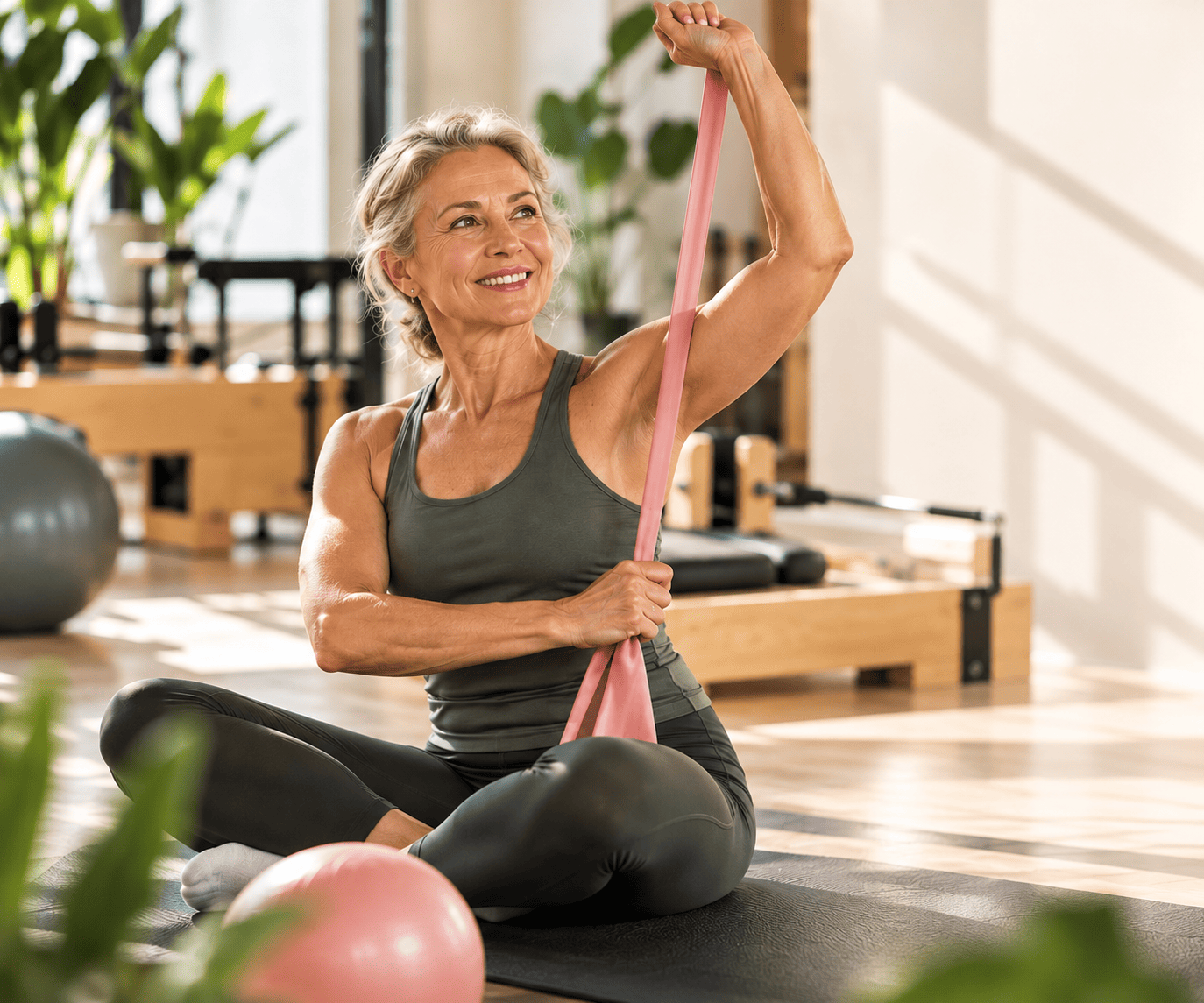
Strength training helps develop the muscles that support your skeleton while providing mechanical stimulation to your bones. Our program incorporates progressive resistance exercises using equipment, resistance bands and body weight, adapted to individual abilities.
2. Weight-Bearing Exercise — Support Bone Health
Bones respond to the forces placed upon them. Weight-bearing exercises encourage the body to work against gravity, helping maintain bone strength. Our program incorporates appropriate standing exercises and functional movements that support everyday activities.
3. Balance & Functional Training — Move With Confidence
For people with osteoporosis, preventing falls is especially important. Balance training develops stability, coordination and confidence in everyday movement. Our program includes exercises that challenge balance and improve functional strength, helping participants feel more confident during daily activities.
Why combine all three? Because supporting bone health requires more than one type of exercise. Strength. Weight-bearing movement. Balance. Together, these form the foundation of our 12-week program.
Is Pilates Safe for Osteoporosis?
Yes, appropriately modified Pilates can be beneficial for people with osteoporosis. Pilates-based exercises can help develop muscular strength, posture, coordination and body awareness.
However, not every traditional Pilates exercise is suitable for someone with osteoporosis, particularly movements involving repeated or loaded spinal rounding. This is why understanding exercise selection and modifications is essential.
At My Core Studio, we focus on controlled, progressive movement with guidance that considers individual needs, physical abilities and fracture risk.
Introducing Our 12-Week Osteoporosis & Osteopenia Movement Program
We’ve designed this program for women who want to take an active role in their bone health without feeling intimidated by exercise.
Our approach combines three essential training methods in a structured program, helping participants build strength, improve balance and develop confidence in movement.
What’s Included?
24 Guided Studio Sessions — Two 50-minute sessions per week combining resistance training, weight-bearing exercises and balance training.
Weekly Exercise Videos — Instructional videos to reinforce what you learn in the studio.
Home Movement Practice — Simple exercises to encourage consistency beyond your studio sessions.
Personal Starter Kit — Exercise equipment, such as resistance bands or balls, to support your home practice.
Program Details
| Program | Osteoporosis & Osteopenia Movement Program |
| Starting | November 1, 2026 |
| Duration | 12 weeks |
| Sessions | 24 guided studio sessions |
| Wednesday | 5:30 PM |
| Saturday | 8:00 AM |
| Location | My Core Studio, Dubai |
| Designed for | Women 50+ diagnosed with osteoporosis or osteopenia |
Participation is subject to individual suitability.
Frequently Asked Questions
Can exercise improve bone density?
Appropriate resistance and weight-bearing exercise can help maintain bone density and may improve it in some individuals. Results depend on factors including exercise intensity, consistency, age and overall health.
Can I exercise if I have osteoporosis?
Yes. Many people with osteoporosis can exercise safely with appropriate guidance. However, exercise selection should consider your medical history, fracture risk and physical abilities.
Do I need previous Pilates experience?
No previous Pilates experience is necessarily required. Our program is designed around structured movement, with modifications according to individual needs.
Can I join if I’ve had a fracture?
This depends on the type of fracture, when it occurred and your current medical condition. Please speak with our team before enrolling, as medical clearance may be necessary.
Your Bones Need Movement. Your Body Needs Strength.
An osteoporosis diagnosis doesn’t have to define what you’re capable of. With appropriate exercise, consistent guidance and a better understanding of your body, you can take meaningful steps toward maintaining strength, balance and independence.
At My Core Studio, we believe that getting older shouldn’t mean getting weaker. It’s never too late to start moving with purpose.
Ready to Build Strength and Move With Confidence?
Join our 12-Week Osteoporosis & Osteopenia Movement Program, starting November 1, 2026.