Postnatal Pilates Is Not Optional — It’s a Necessity. Here’s Why
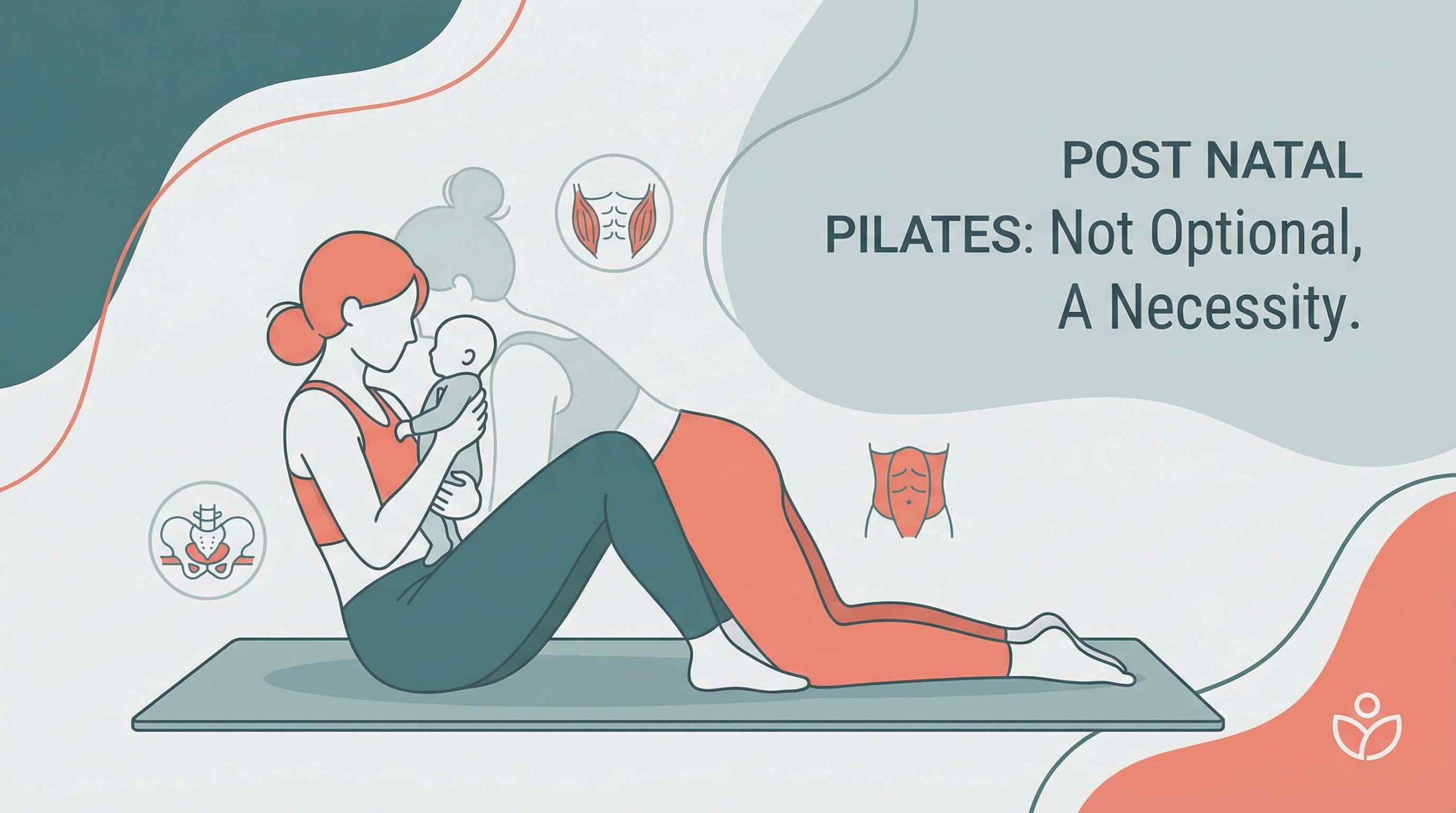
After childbirth, women are often told to “take it slow,” “rest more,” or “ease back into exercise when ready.” While rest is important, what’s often missing from the conversation is this:
the postnatal body needs structured rehabilitation, not just time.
Postnatal Pilates isn’t a fitness trend or a luxury add-on. It is a necessary step in restoring function, strength, and long-term health after pregnancy and birth.
Without targeted rehabilitation, many women continue to experience:
- Pelvic floor dysfunction
- Diastasis recti (abdominal separation)
- Back, hip, or pelvic pain
- Poor posture and breathing patterns
- Core weakness that affects daily movement
- Incontinence or prolapse symptoms
These are not “normal parts of motherhood.”
They are signs that the body needs intentional recovery.
Why Postnatal Pilates Is Different From Regular Exercise
Traditional workouts often focus on burning calories or “getting your body back.”
Postnatal Pilates focuses on something far more important: getting your body working properly again.
Pilates is uniquely suited for postnatal recovery because it:
- Rebuilds deep core muscles safely
- Restores pelvic floor function through breath-led movement
- Improves posture and spinal support
- Re-educates movement patterns affected by pregnancy
- Supports joint stability without high impact
- Progresses gradually, respecting healing timelines
It is rehabilitation before performance — and that matters.
Postnatal Pilates isn’t optional because pregnancy and birth aren’t optional events — they are major physical transformations.
The body deserves:
- Rehabilitation
- Education
- Support
- And time guided by intelligent movement
At its core, postnatal Pilates is not exercise.
It is essential care for a woman’s body after birth.