
Why the Neck Takes the Beating: 5 Common Causes of Neck Pain in Today’s World
The neck (cervical spine) is the loosest, most mobile part of the spine. This mobility allows us to turn, look, nod, and orient ourselves in the world — but it also makes the neck the most vulnerable.
Unlike the lower back, the neck relies heavily on muscle coordination, posture, and nervous system regulation, not structural stability. When modern life interferes with those systems, neck pain shows up quickly.
Here are five of the most common reasons neck pain has become so widespread today:
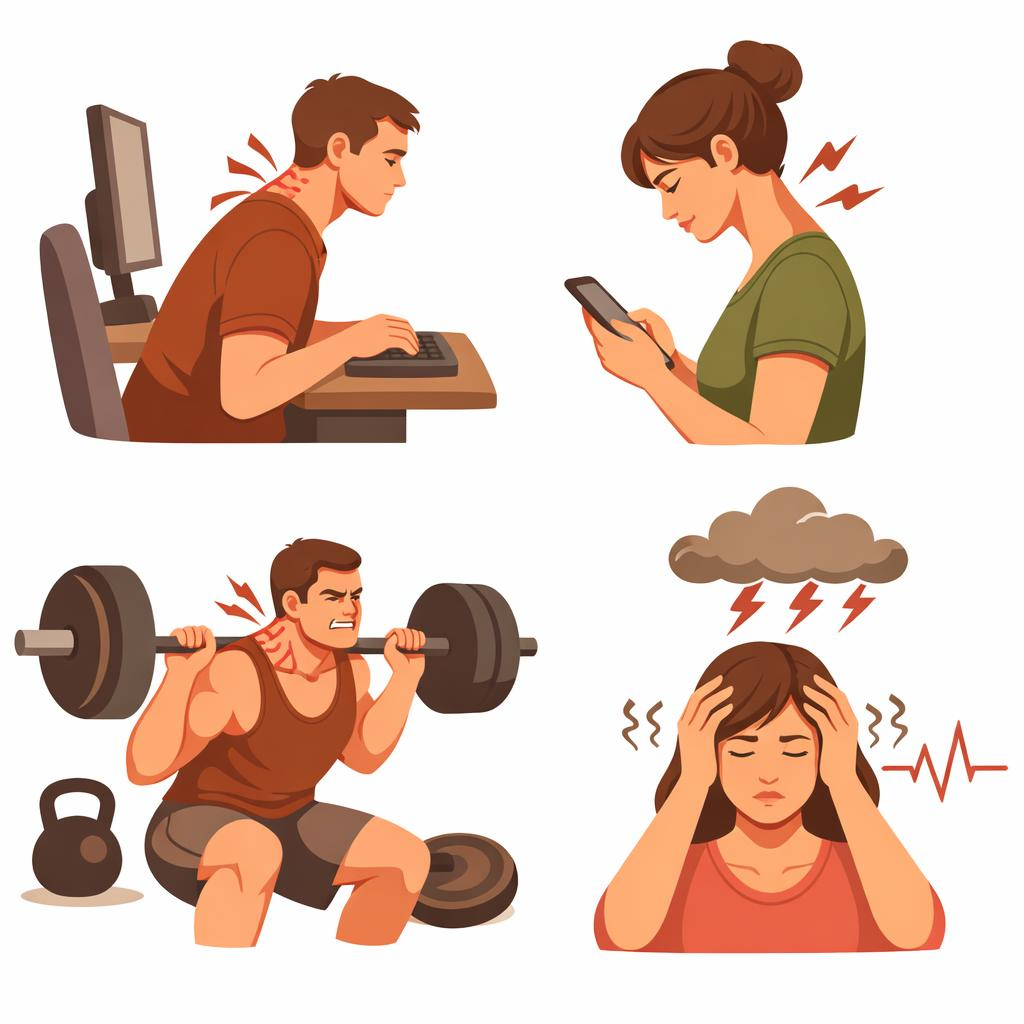
1 – Desk Jobs & Forward Head Posture
Long hours at desks pull the head forward, increasing load on the neck and shoulders.
2- Excessive Screen Time
Phones and laptops keep the neck in static, downward positions, leading to fatigue and stiffness.
3- Repetitive Movement (Including Gym Training)
Repeated patterns, poor lifting technique, and neck bracing during workouts overload the cervical spine.
4- Stress & the Nervous System
Stress keeps the nervous system “on,” causing shallow breathing, elevated shoulders, jaw tension, and constant neck tightness.
5- Lack of Support from the Rest of the Body
Weak core, stiff upper back, or poor shoulder stability forces the neck to compensate.
Why This Matters
Neck pain isn’t just about tight muscles or poor posture.
It’s the result of:
- how we sit
- how we move
- how we train
- how we breathe
- how our nervous system copes with stress
This is why addressing neck pain requires more than stretching or massage — it requires supportive, corrective movement that restores alignment, control, and nervous system balance.
Pilates addresses neck pain through a combination of postural correction, nervous system regulation, and full-body integration. By improving alignment, strengthening deep postural muscles, and restoring balance between the neck, shoulders, and spine, strain on the cervical spine is reduced. Coordinated breath and controlled movement help calm the nervous system, release excess muscle tension, and improve body awareness. By strengthening the core and upper back and restoring spinal mobility, Pilates treats the neck as part of a connected system — allowing it to move freely without compensating.